
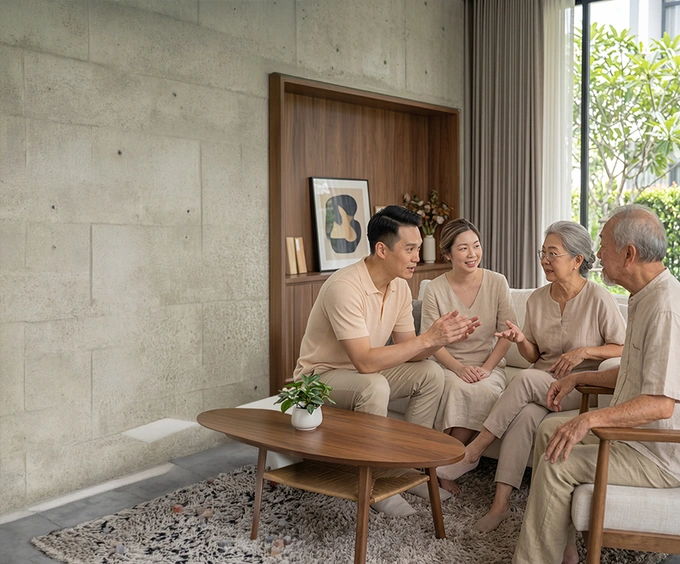
Singapore is home to families with diverse cultures, traditions and beliefs.
Within the same family, one person may identify as Buddhist, another may follow Taoist traditions, while someone else may consider themselves a Freethinker.
These differences are a natural part of our multicultural society.
However, when families begin discussing life education, memorial preferences or pre-planning arrangements, questions about religious and personal beliefs may arise.
What is the difference between Buddhism and Taoism? What does it mean to be a Freethinker? How can families respect different beliefs when making important decisions?
Understanding these perspectives can help families communicate with greater sensitivity and make choices that reflect the wishes of their loved ones.
Why Do Beliefs Matter in Life Planning?
Our beliefs can influence how we understand life, death, remembrance and family responsibilities.
For some individuals, religious teachings provide guidance and comfort. For others, cultural traditions, family values or personal philosophy may play a more important role.
These perspectives can shape preferences about ceremonies, prayers, memorial practices and how a loved one wishes to be remembered.
Yet religious identity alone does not tell us everything about a person’s wishes.
Two people who identify with the same religion may have different preferences, while family members with different beliefs may share similar values.
The most important starting point is not to make assumptions, but to ask, listen and understand.
1. Buddhism: Compassion, Mindfulness and the Nature of Life
Buddhism is a spiritual and philosophical tradition based on the teachings of the Buddha.
Among its central teachings are compassion, wisdom, mindfulness, impermanence and the understanding of suffering.
Buddhist traditions often encourage individuals to reflect on the changing nature of life and the importance of living with kindness and awareness.
How Buddhism May Influence Memorial Preferences
Depending on the Buddhist tradition and the individual’s wishes, memorial practices may include chanting, prayers, dedication of merit and ceremonies conducted by monks, nuns or other religious practitioners.
Some Buddhist families may find comfort in rituals that express compassion, gratitude and good wishes for the deceased.
Practices can differ among Buddhist communities and traditions, including Chinese Mahayana, Theravada and Tibetan Buddhism.
Not every Buddhist family follows the same rituals or has the same preferences.
For this reason, it is helpful to understand the specific practices that are meaningful to the individual and family.
2. Taoism: Harmony, Tradition and Respect for Ancestors
Taoism is a Chinese religious and philosophical tradition with teachings centred on the Tao, often understood as the Way, and living in harmony with the natural order.
Taoist thought includes ideas of balance, simplicity and the relationship between human life and the wider universe.
Religious Taoism also includes a rich variety of temples, deities, rituals and ceremonial traditions.
How Taoism May Influence Memorial Preferences
In some Taoist families, memorial practices may involve prayers, offerings and ceremonies conducted by Taoist priests.
These rituals can express respect for the deceased, support religious beliefs about the spiritual journey and maintain connections with family and ancestral traditions.
Ancestral remembrance may also hold an important place in family life.
However, ancestor veneration is not exclusive to Taoism. It is also part of broader Chinese cultural traditions and may be practised by families with different religious identities.
Taoist customs vary according to family traditions, community practices and the religious tradition being followed.
The meaning behind a practice is often just as important as the practice itself.
3. Freethinker: Personal Values and Individual Choice
In Singapore, the term Freethinker is commonly used by some people who do not identify with an organised religion.
However, Freethinker is not a single religion or a fixed set of beliefs.
A person who identifies as a Freethinker may be atheist, agnostic, non-religious or guided by a personal philosophy.
Others may value certain cultural traditions without subscribing to their religious teachings.
How Freethinkers May Approach Memorial Preferences
Some Freethinkers may prefer a secular or non-religious farewell.
This might include family tributes, music, photographs, personal messages and reflections on the person’s life.
Others may be comfortable including selected cultural practices because of their significance to loved ones.
There is no universal Freethinker approach.
The most meaningful arrangement is one that respects the individual’s stated wishes and personal values.
4. Understanding the Differences at a Glance
Perspective
Buddhism
Taoism
Freethinker
Main orientation
Teachings of the Buddha
Taoist philosophy and religious traditions
Personal reasoning, values or non-religious worldview
Commonly emphasised values
Compassion, wisdom, mindfulness
Harmony, balance, tradition
Individual choice, personal meaning
Possible memorial elements
Chanting, prayers, merit dedication
Rituals, prayers, offerings
Secular tributes, personal remembrance
Important consideration
Practices vary by Buddhist tradition
Practices vary by Taoist tradition and family
Preferences differ widely between individuals
These descriptions are general introductions, not rules for every person or family.
5. When Different Beliefs Exist Within One Family
A family may include Buddhist parents, Taoist grandparents and adult children who identify as Freethinkers.
When discussing pre-planning, differences in beliefs may sometimes lead to uncertainty.
One person may value traditional ceremonies, while another may prefer a simpler approach.
These differences do not necessarily mean that family members lack respect for one another.
They may simply express love and remembrance in different ways.
Families can begin by asking:
- What beliefs or traditions are personally meaningful to you?
- Are there any practices you would especially like to include or avoid?
- Which family customs are important to preserve?
- How can we respect your wishes while remaining considerate of other family members?
These conversations create opportunities for understanding before important decisions need to be made.
6. Respecting Beliefs in Pre-Planning
Pre-planning is an opportunity to communicate preferences clearly while allowing family members time to understand their meaning.
A Buddhist individual may wish to discuss particular prayers or chanting practices.
A Taoist individual may want to consider specific ceremonies or ancestral traditions.
A Freethinker may prefer a non-religious gathering focused on memories and gratitude.
Others may wish to combine certain cultural elements with personal preferences, where appropriate.
There is no single arrangement that is suitable for everyone.
Before making decisions, families should clarify the individual’s wishes and, where religious practices are involved, seek guidance from an appropriate religious representative when necessary.
7. Beyond Religion: What Families Have in Common
Although Buddhism, Taoism and Freethinker perspectives differ, families across these backgrounds often share important human values.
They wish to express love.
They want to show respect.
They hope to preserve meaningful memories.
And they want their loved ones to be treated with dignity.
Life education encourages us to recognise these shared intentions while respecting the differences that make every individual unique.
Understanding another person’s beliefs does not require us to adopt them.
It begins with being willing to listen.
A Meaningful Choice Begins with Understanding
Religious and personal beliefs are deeply individual.
They may be shaped by family upbringing, life experiences, spiritual practice and personal reflection.
When families discuss these beliefs openly and respectfully, they create space for more thoughtful pre-planning.
The goal is not to decide which belief is right.
It is to understand what matters to each person and how their wishes can be respected.
Different beliefs may guide different traditions, but love, dignity and understanding can remain at the heart of every family’s decisions.
Honour Every Belief. Respect Every Wish.
Whether your family follows Buddhist traditions, Taoist customs or a non-religious approach, the first step is a meaningful conversation.